
ApolloCore™ Turbocharges Marine PTZ cameras
Tocaro Blue Launches ApolloCore™ AI Camera Software for Autonomous Maritime Perception
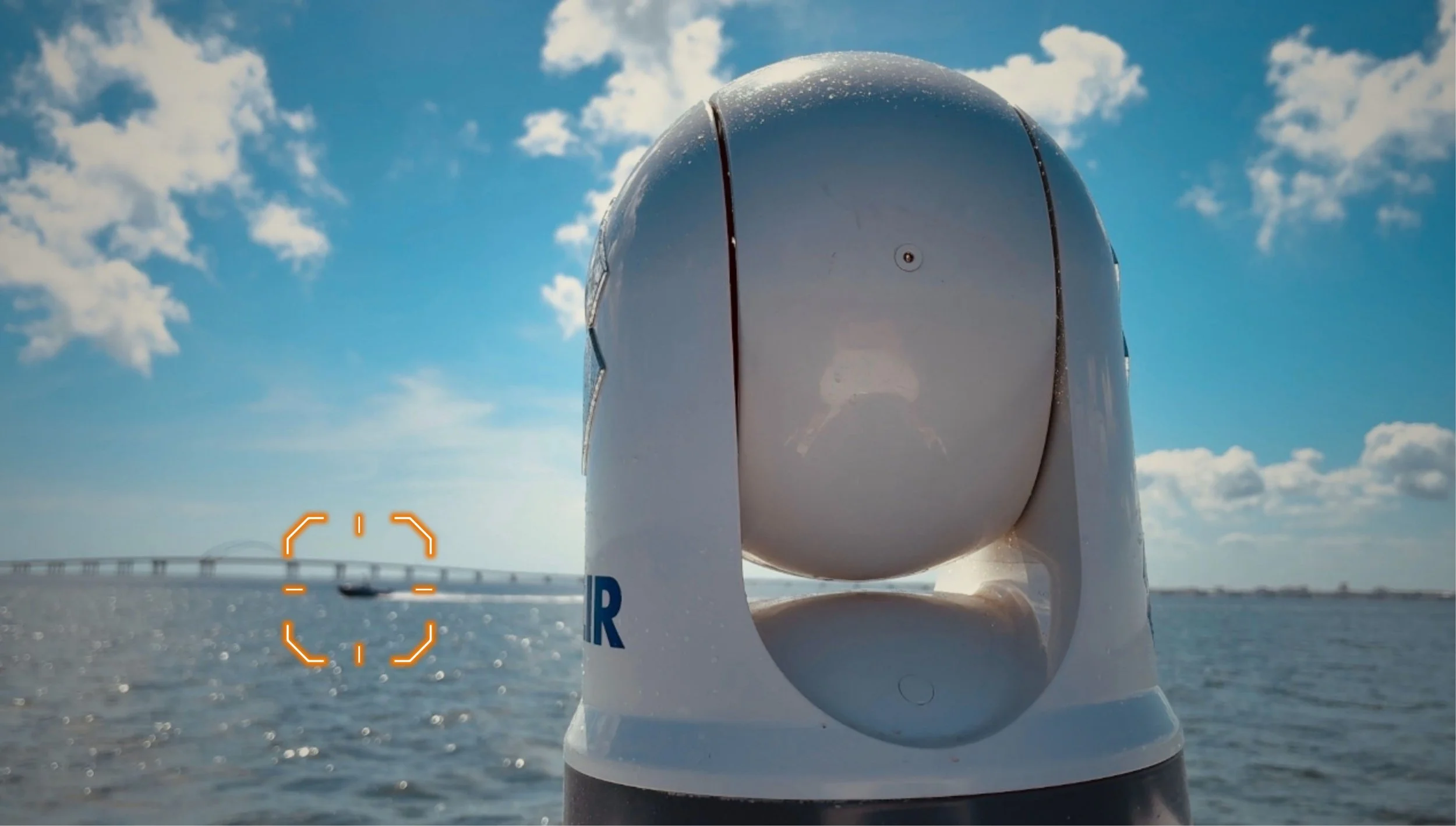
Seek-and-Follow objects on the water
April 20th— Tocaro Blue today announced ApolloCore™, a machine learning software solution that transforms off the shelf point-tilt-zoom marine cameras into high performance perception systems for autonomous and defense vessels.
Designed for easy integration into maritime autonomy stacks, ApolloCore delivers real-time object detection and ranging, persistent tracking, and fusion with Radar. ApolloCore integrates with the vessel’s IMU to dramatically improve the stabilization of the camera for maintaining reliable perception in dynamic conditions for unmanned systems.
Electro optical and infrared cameras are an essential sensor in maritime environments because they provide the visual classification needed to distinguish vessels, navigation markers, and debris. As autonomous surface vessels (USVs) take on expanding roles in defense and security missions, robust perception systems are critical for navigation and surveillance.
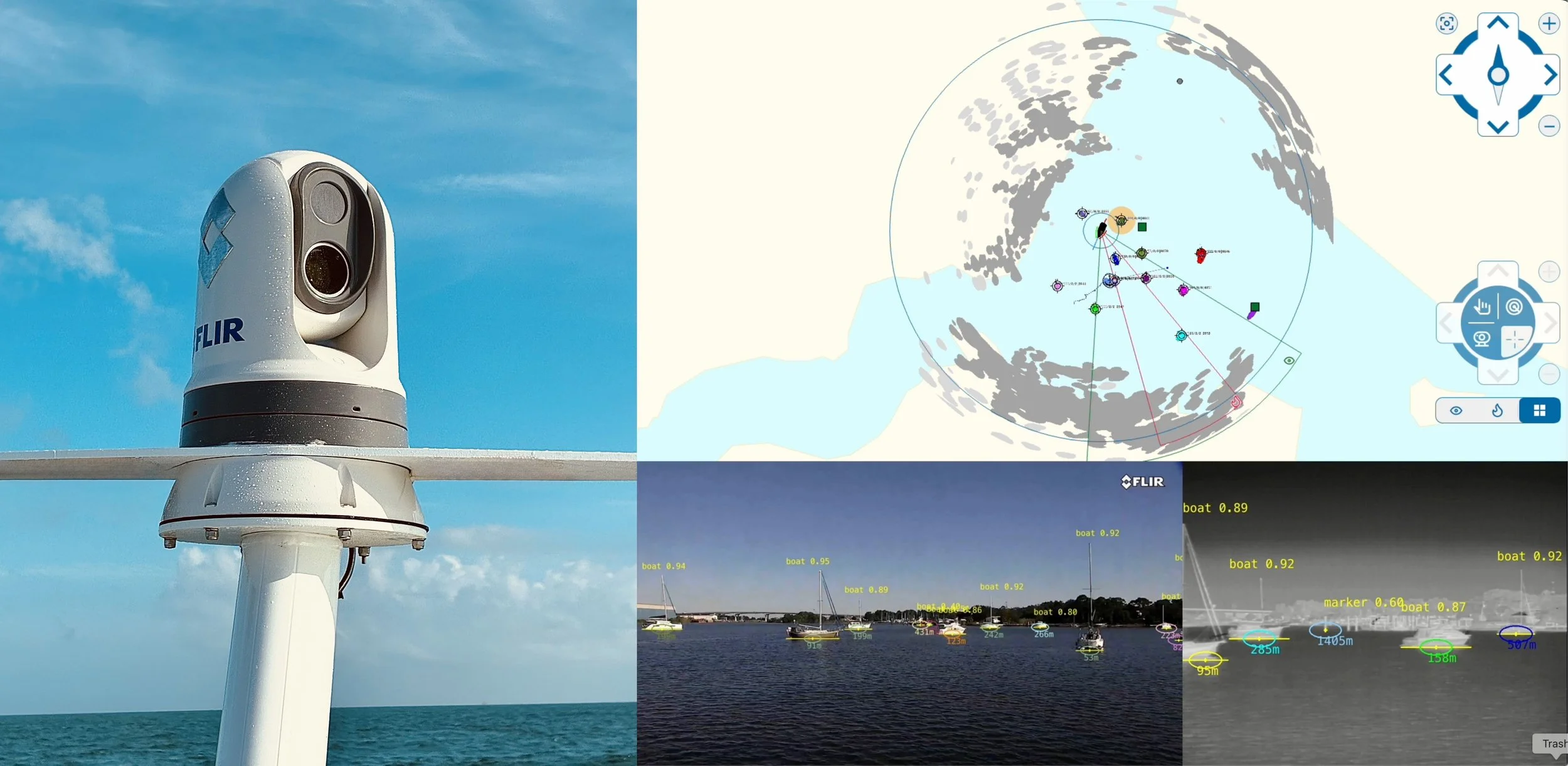
Pictured: Flir camera and ApolloCore Configuration App Development Tool
Commercial-off-the-shelf PTZ cameras were designed for direct operator control and viewing. This human in the loop design means that developers face many challenges when they repurpose these sensors for unmanned applications. ApolloCore is a comprehensive APItoolsetdevelopment teams use to enhance PTZ Cameras for autonomous vessel applications.
ApolloCore addresses a key challenge for camera-based perception at sea: maintaining stable and accurate visual tracking from a moving platform. By leveraging vessel attitude data from sensors, ApolloCore actively stabilizes PTZ camera systems and maintains precise pointing even in rough sea states. This capability enables reliable long-range observation and object tracking from camera installations commonly found on medium and small USV’s.
Beyond stabilization, ApolloCore applies a marine detection model to enable cameras to detect and classify multiple objects simultaneously, maintain persistent tracks, and estimate range to targets. This capability supports both autonomous navigation and intelligence, surveillance, and reconnaissance (ISR) missions. ApolloCore’s native detection model benefits from over 3.5M images of marine objects and includes over a dozen COLREGS-compliant classes. ApolloCore also supports the use of third party detection models trained on customer datasets.
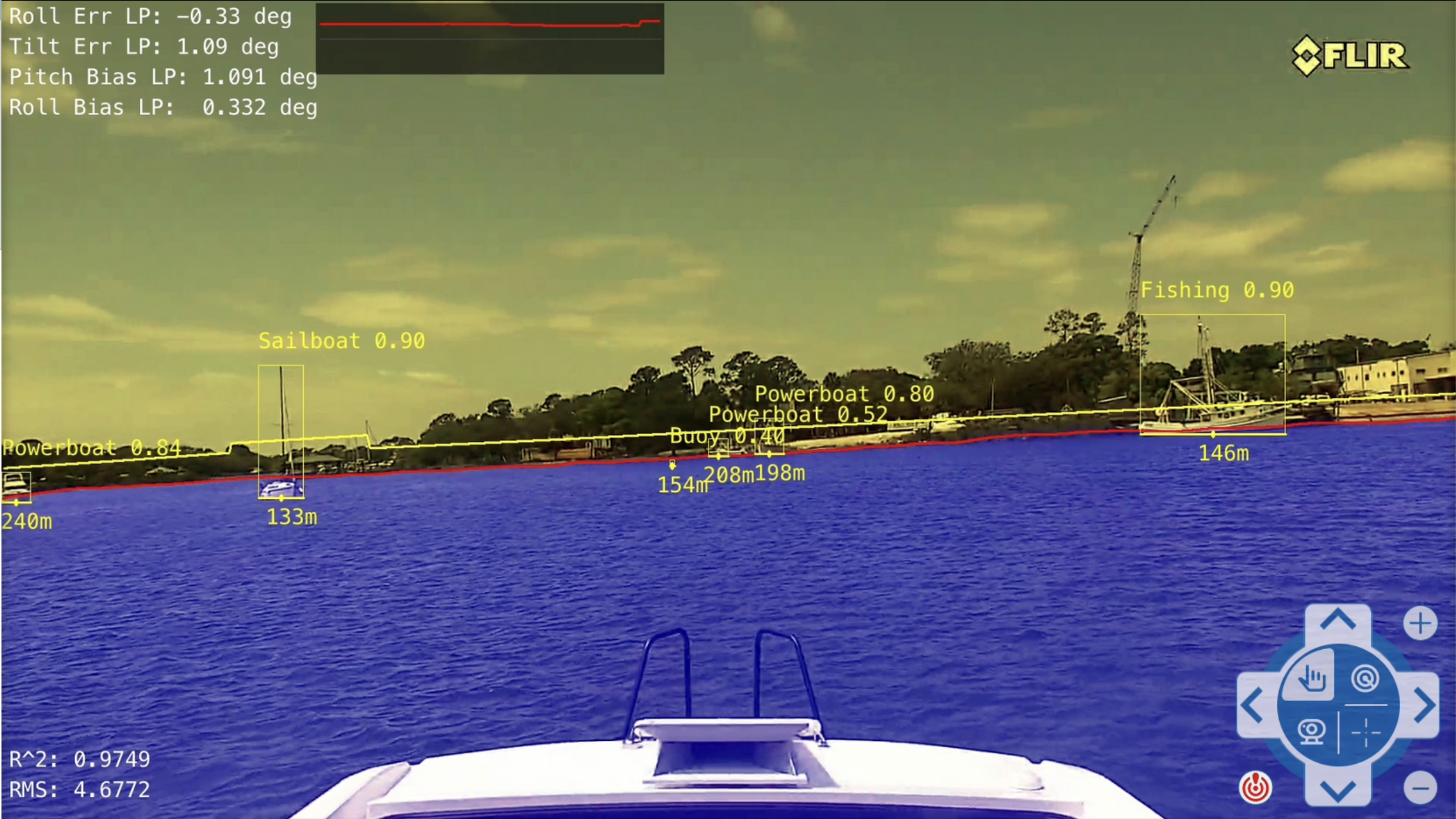
ApolloCore dletects 15 object classes: 8 COLREGS-compliant vessel types, 2 marker classes, and 4 specialized classes including persons and debris
ApolloCore is designed to integrate with existing maritime sensor architectures and is natively compatible with Tocaro Blue’s ProteusCore™ Radar processing software. When deployed together, the two systems provide measurement-level sensorfusion for enhanced maritime perception: Radar provides wide-area detection and motion tracking, while cameras provide visual identification and classification of targets. Fusing Radar and camera detections is a powerful approach, but challenging to implement. Combining ApolloCore and ProteusCore offers an out of the box sensor fusion solution for more precise object detections and classifications.
Together, ApolloCore and ProteusCore create a complementary perception stack that improves situational awareness and tracking confidence across the vessel’s operating environment.
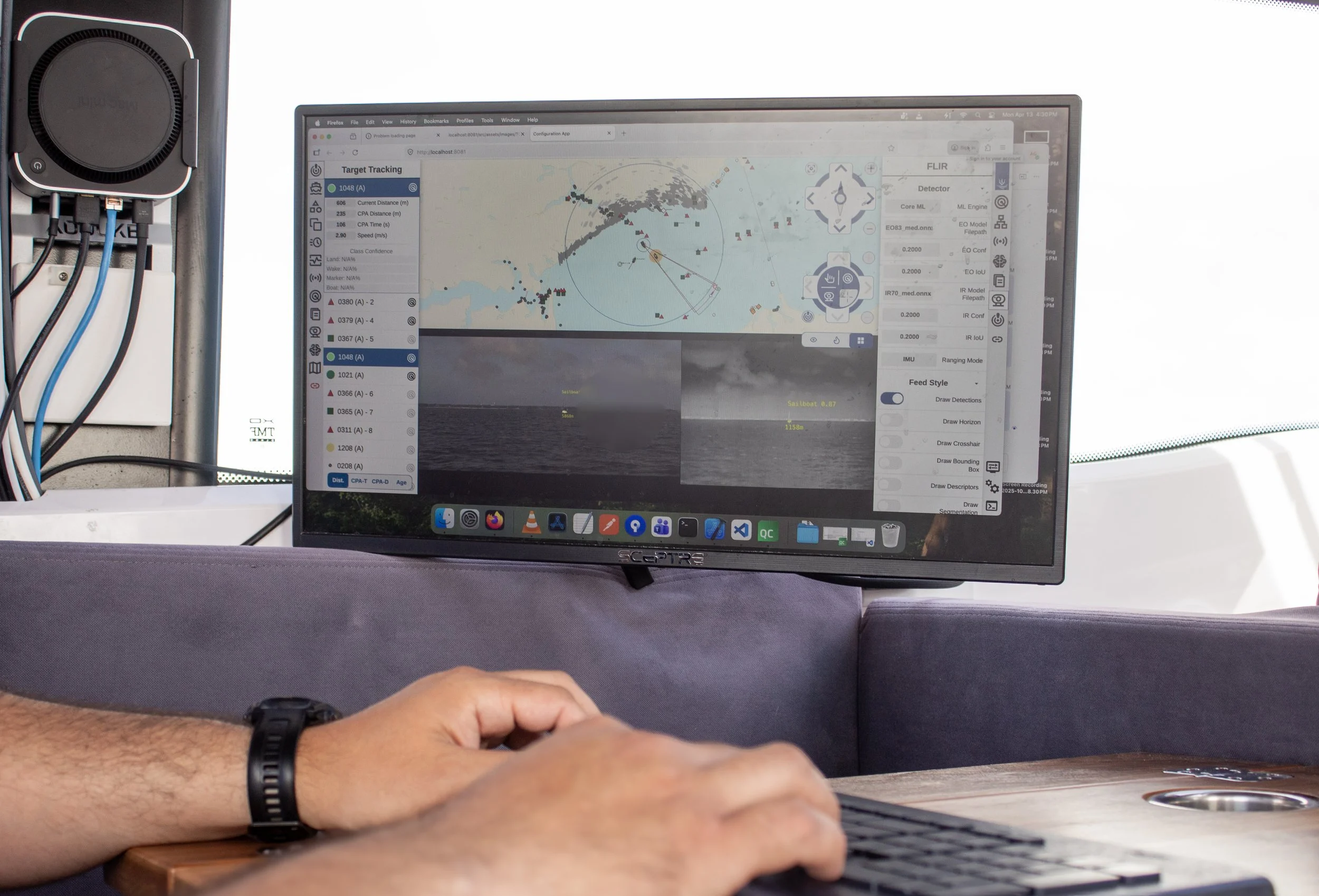
Multi-Sensor Fusion
Together, ApolloCore and ProteusCore create a complementary perception stack that improves situational awareness and tracking confidence across the vessel’s operating environment.
“Autonomous vessels don’t just need sensors. They need perception,” said John Minor, CEO of Tocaro Blue. “With ApolloCore and ProteusCore, we’re building the software layer that enables vessels to interpret the world around them with the clarity and context of a human operator—and ultimately exceed it.”
ApolloCore can operate as a standalone camera perception system or alongside ProteusCore allowing USV builders and defense integrators to tailor deployments to mission requirements. Like ProteusCore, ApolloCore is deployed as an executable software application and runs directly on the vessel’s existing hardware. ApolloCore runs on GPU hardware and integrates through developer APIs designed for autonomy, navigation systems, and ISR applications.
By delivering the software intelligence that enables vessels to understand, interpret, and act on their environment with precision, ApolloCore represents a critical step in Tocaro Blue’s mission to become the leading provider of maritime perception solutions. As autonomy accelerates across maritime defense and commercial operations, perception is the defining layer; and Tocaro Blue is building the foundation to lead it.
With ApolloCore, Tocaro Blue continues to expand its portfolio of AI-powered maritime perception software designed to support the next generation of autonomous and crewed maritime platforms.
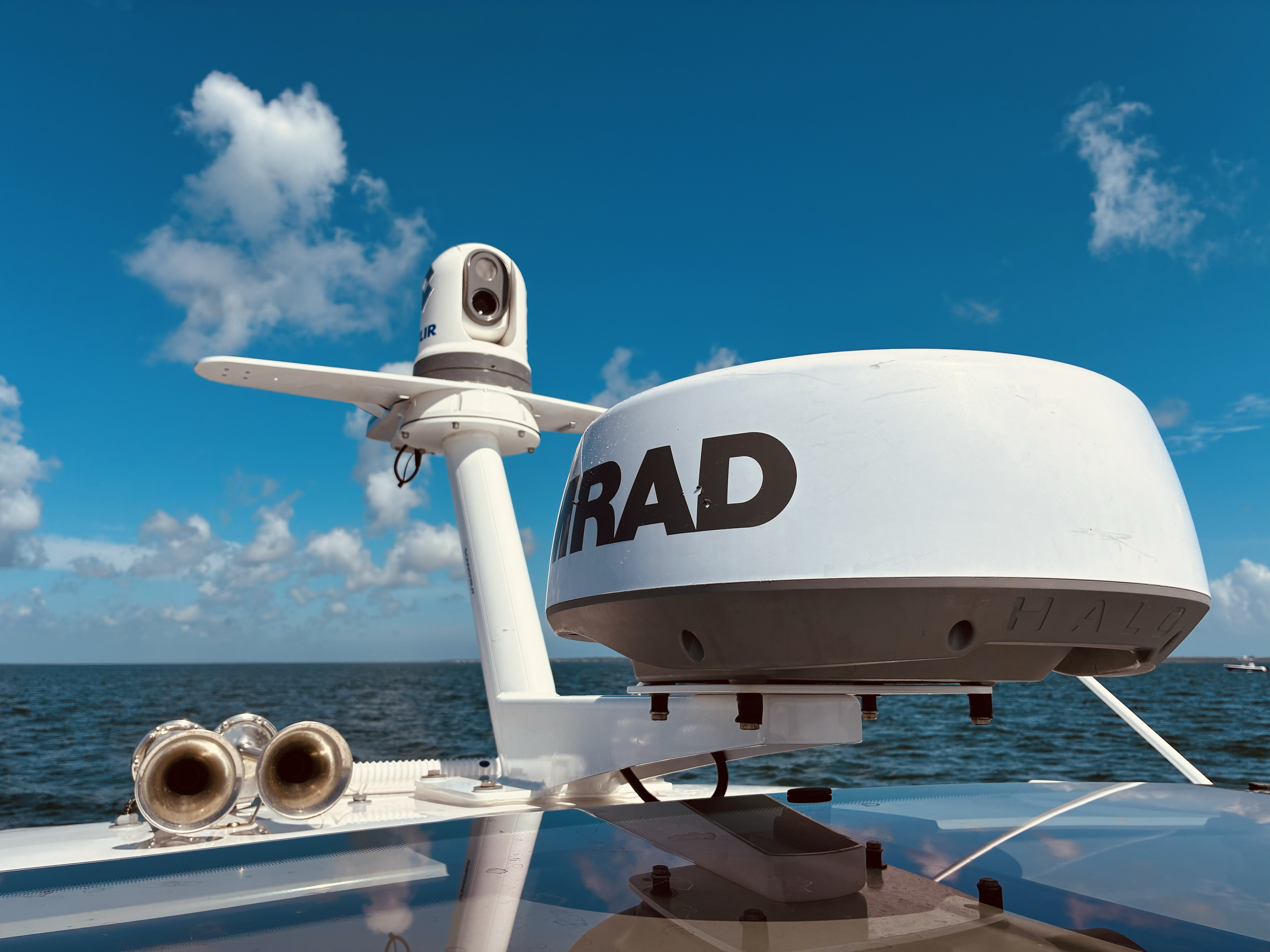
Pictured: Flir camera and Simrad Radar atop Tocaro Blue’s test vessel Sea++