ProteusCore
AI software for Marine Radar
ProteusCore™ transforms low-cost marine Radar into a powerful perception sensor. Tocaro Blue builds AI Radar processing solutions that leverage advanced machine learning models, bringing more capability to marine Radar.
Raw Radar (left) and the stages of ProteusCore (right) detection, classification, and object tracking
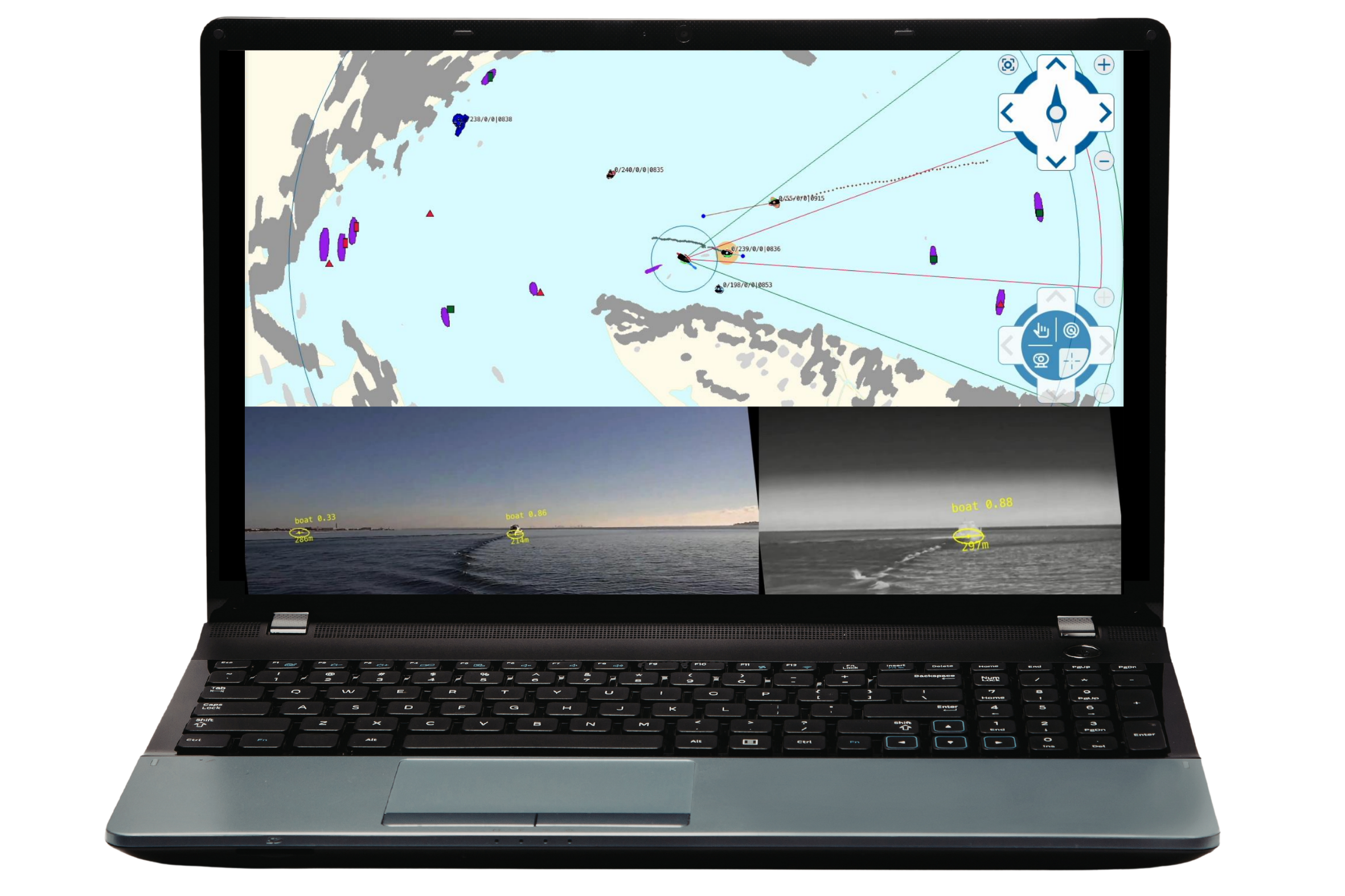
ProteusCore Configuration App demonstrating Radar perception with object detection, classification, and tracking capabilities
the Power of Perception
Radar excels in detecting objects at long distances and in harsh conditions. Radar is underutilized for advanced driver assistance and vessel control when compared to camera and LIDAR sensors due to its natural weaknesses. Radar requires precise tuning, scans very slowly, and returns excess noise.
With in-house machine learning models trained on 3,000,000 + labeled Radar images, ProteusCore implements automatic range and gain tuning for enhanced detection, eliminates noise by classifying every return in the Radar’s view, and tracks those objects with precision.
Learn more about our advancements in Radar technology:
Traditional maritime Radar presents a paradox: it’s essential for safety yet notoriously difficult to interpret. Since 2019, our technical team has been capturing and analyzing one of the largest marine Radar training datasets. Tocaro Blue harnesses this massive proprietary Radar dataset to train the ML models embedded in ProteusCore™, transforming ordinary off-the-shelf Radar into an AI/ML-driven Radar detection and classification solution.
3,000,000+ Frames of radar data
The ProteusCore configuration app allows for viewing of the ProteusCore ML pipeline, and configuration of Radar and NMEA 2000 settings
AutoFocus (Auto-Gain & Range)
Radar systems traditionally require frequent manual Radar gain tuning and range setting. ProteusCore offers a patent-pending Autofocus feature that optimizes object detection based on environmental conditions, sea state, and proximity to land. ProteusCore fine-tunes the precise settings of the Radar so that the machine learning model can accurately find and classify objects in the Radar field-of-view. This comprehensive object detection capability delivers crucial real-time data to systems integrators or autonomous vessel control systems with far more precision and intelligence than existing Radar processing solutions.
The ProteusCore configuration application (shown) automatically adjusts range and gain
radar based classification
After detecting objects with the Radar, ProteusCore applies Tocaro Blue’s proprietary machine learning models to decipher the contents of the Radar images. Using sophisticated data filtering and machine learning, ProteusCore is able to analyze Radar images and determine the class of detected objects. This unique capability offers more context and information than ever before from Radar. Now your Radar knows whether a detection is a small or large vessel, a marker or buoy, and even land or wake. This is critical to informing your navigation for your autopilot system.
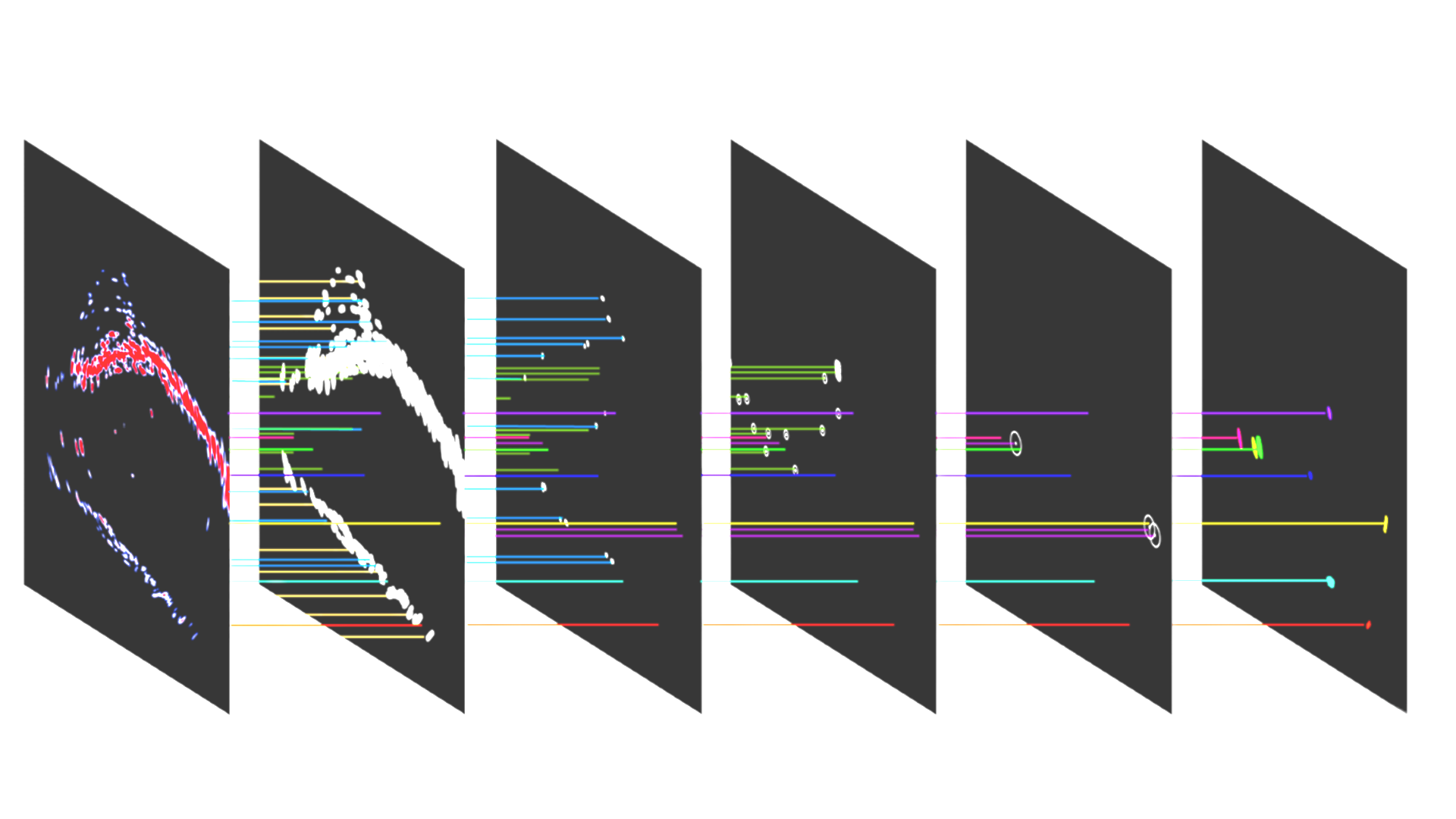
ProteusCore begins with raw Radar, then filters clutter to highlight and classify the objects on the water
Advanced tracking
ProteusCore tracks hundreds of objects, automatically acquiring, tracking and discarding trackers as contacts move in and out of view. Our system provides highly precise outputs without requiring any manual intervention.
For each tracked object, ProteusCore reports position, closest point of approach, velocity, and predicted trajectory.
The ProteusCore software maintains a list of contacts for all objects around the vessel, in real-time
Devkit Hardware
Unlock the full power of ProteusCore with our marine-grade edge computing solution—precision-engineered hardware with ProteusCore software pre-installed. This robust device gives you immediate access to the complete ProteusCore API without integration delays, accelerating your development timeline while you prepare for deeper product embedding.
Rugged, engineered enclosure features watertight seals and a solid-state heat sink for reliable operation in the harshest environments
Conveniently powered from the NMEA 2000 bus to eliminate complex wiring and streamline installation for rapid deployment on any vessel
Intuitive HTML5 interface is accessible from any web browser or marine display, delivering full-featured configuration and real-time testing